Smart Casual, Decoded: How to Always Look Put-Together Without Trying Too Hard
“Smart casual” has to be the most unhelpful dress code in existence. It tells you almost nothing. Too formal and you’re that person who showed up to a rooftop birthday in a blazer while everyone else wore jeans. Too relaxed and you feel underdressed the whole night, tugging at your hoodie like that’ll somehow fix it.
The frustrating part is that smart casual isn’t actually complicated — it just sounds like it should be. Once you stop overthinking it, it becomes the easiest way to get dressed in the morning.

So What Is It, Really?
The simplest way to think about it: you look like you got dressed on purpose, but you’re not trying to impress anyone.
It’s not a uniform. It’s more of a mood. You’re comfortable, you’re not wrinkled, your shoes are clean, and your outfit has at least one piece that gives it a little shape or structure. That’s genuinely most of it.
A Formula Worth Keeping
There are a million ways to dress smart casual, but when you’re stuck, this combination rarely lets you down: something elevated and simple, something with a bit of structure, and one casual piece to stop it from feeling stiff.
In practice that looks like a clean white tee, a blazer, and dark jeans. Or a fitted turtleneck, tailored trousers, and white sneakers. Or a linen shirt with chinos and loafers. The casual piece stops the outfit from looking like you’re heading to a job interview. The structured piece stops it from looking like you just rolled out of bed. That push and pull is exactly what makes it work.
The Pieces That Actually Matter
You don’t need a lot. You need a few things that reliably work together, that you actually reach for, and that don’t make getting dressed feel like a puzzle every morning.
Tops
Start with plain tees — but not just any. The fit has to be right. Too boxy and they look sloppy; too tight and they look like you’re trying too hard in the wrong direction. You’re looking for something that skims the body without clinging to it. White, black, grey, and navy cover almost every combination you’ll ever need. Get two or three you genuinely like wearing and rotate them without guilt.
A button-down shirt is the other essential. Oxford cloth or chambray are the most versatile — they’re structured enough to look intentional but relaxed enough that you’re not accidentally formal. Wear it tucked, half-tucked, open over a tee, or on its own. One shirt, four different outfits. It earns its wardrobe space.
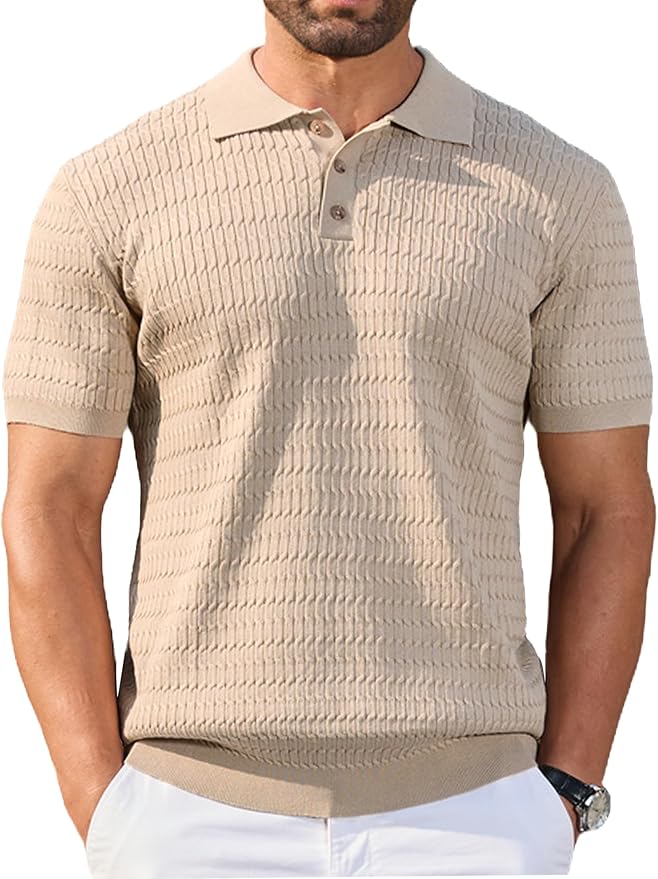
A lightweight knit or fine-gauge sweater rounds out the top half. Not chunky, not branded — just a clean, simple knit in a neutral colour. It works in place of a tee when you want something a little more considered, and it layers well under a blazer or jacket when the temperature drops.
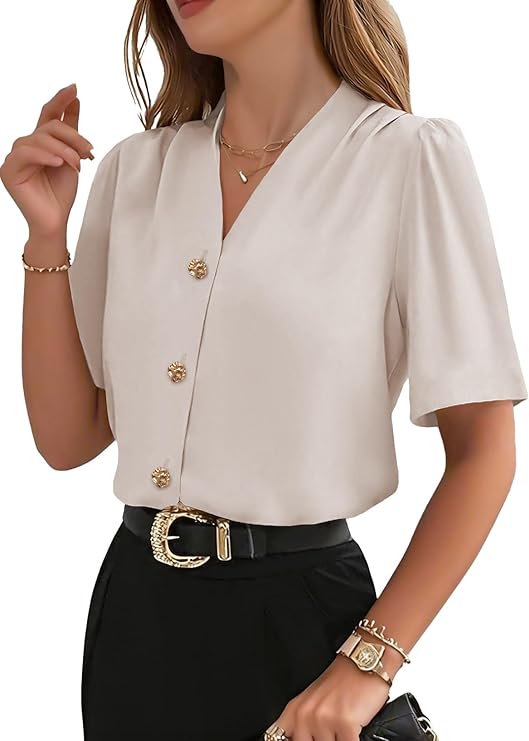
EVALESS Casual Blouses for Women
COOFANDY Mens Knit Polo Shirt
Bottoms
Dark or straight-leg jeans are the backbone of most smart casual outfits. The key word is dark — heavily washed or distressed jeans tilt things too casual and make the rest of your outfit work harder to compensate. A darker wash reads as more polished without requiring any extra effort. Straight leg tends to be the most forgiving cut and the most consistently stylish across different moments and body types.
Chinos or tailored trousers are worth having alongside your jeans. They give you a slightly cleaner line and make the outfit feel a bit more deliberate — which is exactly what smart casual is about. Stick to neutral tones: sand, olive, navy, charcoal. They go with everything and don’t demand much thought.
If skirts are part of your wardrobe, a simple midi in a solid colour or subtle print does the same work. Structured enough to look smart, relaxed enough to be comfortable. Paired with a plain knit or a tucked shirt, it hits the smart casual mark without trying.
Outerwear
This is where a lot of people underinvest — and then wonder why their outfits feel incomplete. Outerwear isn’t just practical; it often does more styling work than any other piece in the outfit.
An unstructured blazer is the most valuable thing you can add to a smart casual wardrobe. It takes a plain tee and jeans from “fine” to “I clearly got dressed today” in about three seconds. The unstructured part matters — you don’t want something stiff or heavily padded. You want something that sits naturally on your shoulders and moves with you. Neutral colours like navy, camel, grey, or beige work across the most combinations.
A good jacket covers the more casual end. A trench coat is timeless and automatically elevates whatever’s underneath it. A bomber in a neutral tone is a bit more relaxed but still looks intentional. An overshirt — basically a shirt worn as a jacket — bridges the gap between the two and works especially well in transitional weather when a full coat feels like too much.
Shoes
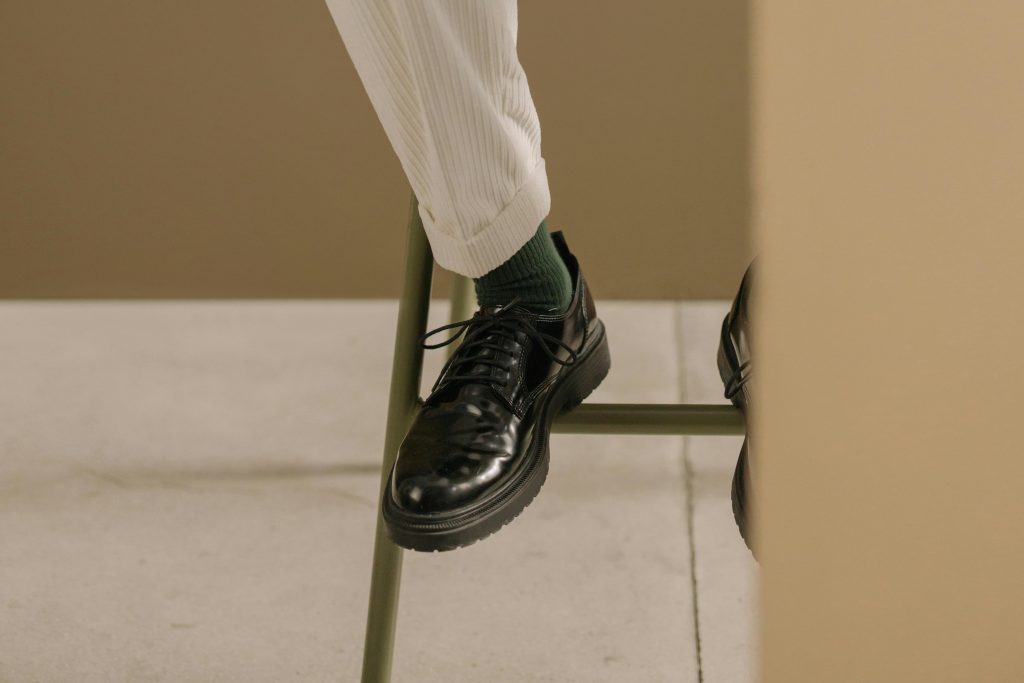
Shoes carry more visual weight than people give them credit for. They often determine whether an outfit reads as smart casual or just casual, and the difference usually comes down to two things: style and condition.
Clean white leather sneakers are the most versatile option in this category. They go with jeans, trousers, chinos, skirts — practically everything. The clean part is non-negotiable. Grubby white sneakers undercut everything else you’ve got on. If yours have seen better days, either clean them properly or replace them.
Loafers are a strong alternative when you want something a bit more polished. They add a quiet refinement to an outfit without tipping into formal territory. Leather or suede both work — suede tends to feel a little softer and more casual, leather a little sharper.
Chelsea boots earn their place in cooler months. They’re slim, clean-lined, and work with most smart casual combinations. Dark brown or black are the most practical choices. If you can only have one pair of boots, make it these.
The Detail Nobody Talks About Enough: Fit
All of the above only works if the clothes actually fit you. This is the thing that separates a wardrobe that looks put-together from one that looks like a pile of decent individual pieces that don’t add up to anything.
Smart casual is built almost entirely on basics. And basics only look good when they fit. A cheap tee that sits perfectly on your body will look better than an expensive one that doesn’t. Trousers that hit at the right point on your waist and break cleanly at the ankle make everything above them look more intentional. A blazer that sits correctly on your shoulders makes you look like you know what you’re doing, even when you genuinely don’t.
It doesn’t mean going to a tailor for everything — though for a blazer or trousers, it’s worth considering. It means being honest with yourself about what fits and what doesn’t, and not holding onto pieces that don’t work just because they cost something or used to fit differently.
Five Outfits to Fall Back On
When nothing in the wardrobe seems to be working, these combinations are reliable:
White tee, dark jeans, blazer, white sneakers — the all-purpose option. Brunch, casual Friday, a date where you’re not sure of the vibe.
Fine knit sweater, straight-leg trousers, loafers — quiet and polished. Works for dinners and low-key meetings without feeling like you dressed for a boardroom.
Open chambray shirt over a plain tee, chinos, clean sneakers — relaxed but clearly thought about. Good for days when you want to look put-together without feeling overdressed.
Fitted turtleneck, tailored trousers, Chelsea boots — probably the highest return on effort of any outfit combination. Three pieces, looks great, works in most temperatures.
Linen shirt half-tucked into dark jeans, leather sandals or loafers — a warm weather go-to. Feels easy, doesn’t look it.
What Usually Goes Wrong
A few things consistently derail an otherwise solid smart casual outfit. Heavy distressing on jeans pushes the whole look too casual — save those for actual casual days. Ignoring fit is the big one; smart casual isn’t meant to be shapeless. Mismatched formality levels, like a structured blazer over gym shorts, just looks confused rather than creative. And beat-up shoes — already mentioned, but really, it’s worth saying twice. Shoes carry a lot of visual weight and dirty or falling-apart ones undercut everything else you’ve got going on.
The Actual Point of All This
Smart casual is just about looking like you made a choice. Not an elaborate one. Just a choice. You picked these pieces, they fit, they work together, and you’re ready to go.
That’s it. There’s no secret beyond that.